Prompt workshop
What should I write in a ‘very Chinese time’ meme prompt?
A useful meme-video prompt gives the character one setting, one clear action and a short line of dialogue. For a longer clip, build from a relatable habit to an exaggerated realization, then finish with the ‘very Chinese time’ line and a topic-specific punchline. Match the spoken text to your chosen duration.
What is a reusable prompt structure?
Separate what the viewer sees from what the character says. A scene direction such as ‘he looks suspiciously at a glass of ice water’ belongs in the visual description. Put the spoken words after a clear Dialogue label. This makes your own intent easier to review before you spend credits.
For a longer monologue, use five beats: the old habit, the new obsession, an absurd consequence, the familiar line, and a payoff. For a short clip, choose just one joke. You do not need to fit the full catchphrase into every version.
Use the supplied reference character in a nostalgic PS2-style cutscene. Setting: [one place]. Action: [one visible behavior]. Camera: [one simple movement]. Delivery: relaxed, conversational, dry humor. Dialogue: "[your short script]". Keep the character’s appearance consistent.
How can I turn hot water into a joke?
Make the thermos the character’s most important possession. The comic target is how seriously he takes it. You can show the obsession without suggesting that drinking hot water cures illness or that everyone shares the same habits.
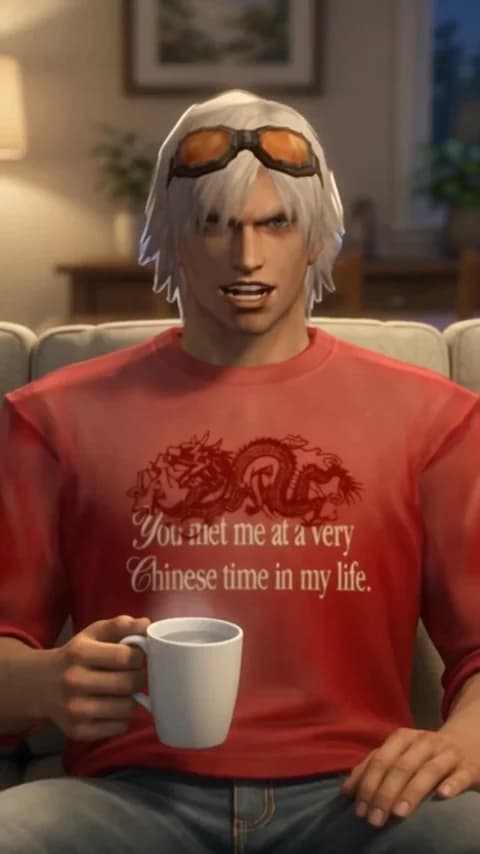
A PS2-style kitchen cutscene with the supplied reference character. He carefully places a thermos in his bag, then notices an ice tray and looks betrayed. Gentle camera push-in. Dialogue, delivered with dry humor: "I used to pack my phone first. Now it’s the thermos. You met me at a very Chinese time in my life."
What is a simple mahjong scene?
A single tile can carry the joke. Start with a quiet table and a close-up, rather than asking for four people speaking at once. Other players can react silently in the background. Keep the character’s confidence out of proportion to what he actually understands.
Use the reference character in a retro game cutscene at a mahjong table. He studies one tile, nods as if he has solved a great mystery, then looks directly at the camera. Background players stay silent. Dialogue: "I don’t understand this tile. But I’ve been staring at it confidently for twenty minutes. Even devil may cry."
How do I make the slippers transformation funny?
Give an everyday object a ridiculous level of ceremony. A neatly arranged row of slippers is a readable visual setup. One small gesture and one understated line can be more coherent than a complicated visitor scene with several actions.
A nostalgic PS2-style apartment entrance, using the supplied character reference. He presents a perfectly aligned row of house slippers like a priceless collection. Slow pan toward his satisfied expression. Dialogue: "Bedroom slippers. Kitchen slippers. Guest slippers. I don’t own a home anymore. I manage a footwear department."
How do I adapt these prompts to a shorter clip?
These are original writing examples, not duration-tested guarantees. Read each line aloud and time it. If it is too long, keep the strongest sentence and remove the setup, or choose a longer available duration. Leave room for a glance, sip or pause instead of filling every second with speech.
For a very short hot-water clip, the dialogue could simply be ‘The thermos comes first.’ The image supplies the rest of the story. For a longer version, explain what changed and add the catchphrase at the end. Pick the duration in the studio controls; writing ‘30 seconds’ inside a prompt does not change the selected duration.
What should I change if the first result feels wrong?
Revise one main thing at a time: fewer words for rushed speech, fewer actions for confusing movement, or a single scene for an unclear transition. This is a practical editing approach, not a guarantee of a specific model outcome. Generated speech and character consistency still vary.
Use the studio’s editable prompt to paste your version. Review the current credit quote before submitting each new generation. Our existing examples can help you judge the tone, but they should not be treated as proof that these new prompts will produce identical results.
Next in your Chinese era.

How do you make a Dante ‘very Chinese time’ meme video?
A practical walkthrough: write a short Dante monologue, choose your video settings, generate a cutscene and review the result before sharing.
Read the guide
Should I choose 480p or 720p, and how long should my meme video be?
Compare Standard and Pro, portrait and landscape, and short versus longer scripts without guessing the credit cost of your next meme video.
Read the guide